Chad Armstrong

Software Engineer & Digital Strategist

Selected projects. These are real problems solved for real organizations. Where clients have requested confidentiality, identifying details have been omitted.

01

Historical Gallery

Digital Archive Platform
Historical Gallery
3 photos

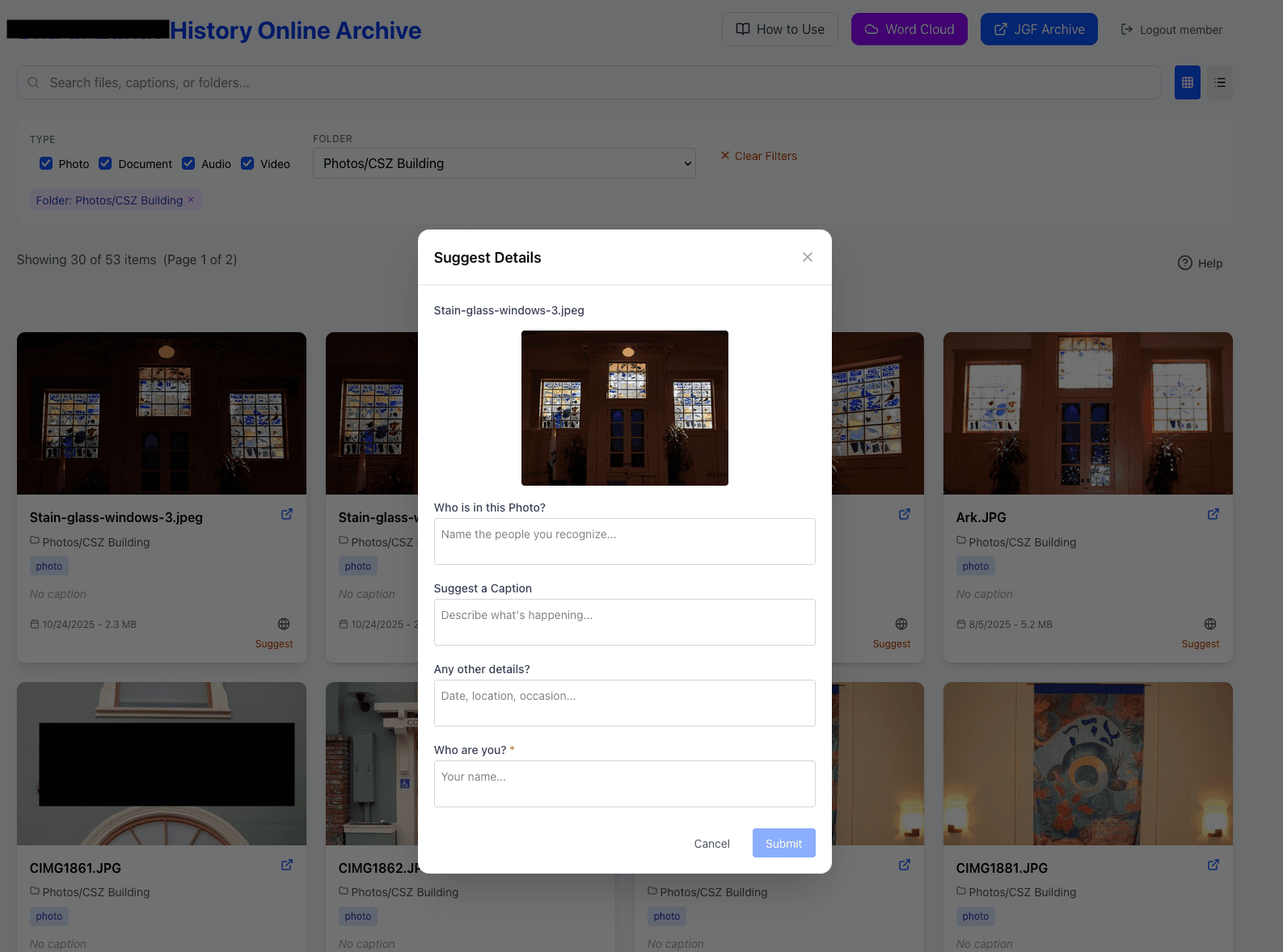
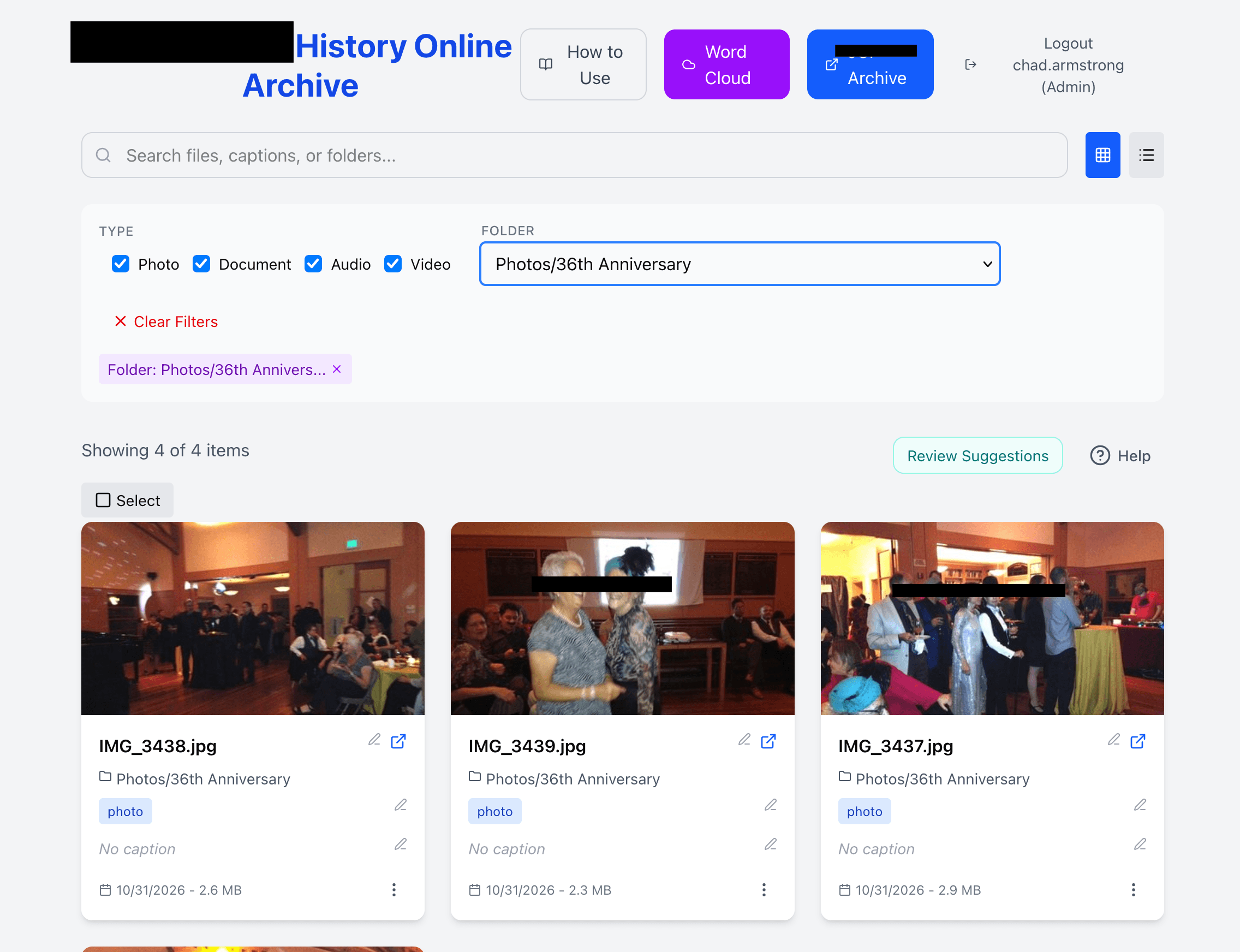
An organization's institutional memory lived across thousands of photos, scanned documents, videos, and audio recordings - stored in Google Drive folders with inconsistent naming and no way to search across them. The goal was to build a system that could ingest that entire corpus, enrich it with machine-generated metadata, and surface it through a polished research interface.

What Was Built

A full-stack platform where files flow in automatically. When a new file lands in Google Drive, a webhook triggers a processing pipeline: a Python microservice generates smart-cropped thumbnails (with portrait-aware cropping to preserve faces), a second service renders PDFs to images, text is extracted via a hybrid approach that tries native parsing first and falls back to Google Cloud Vision OCR for scanned documents, and finally OpenAI generates 15-20 contextual tags per item - covering topics, people, places, organizations, events, and time periods - with no manual effort required.

Research Interface

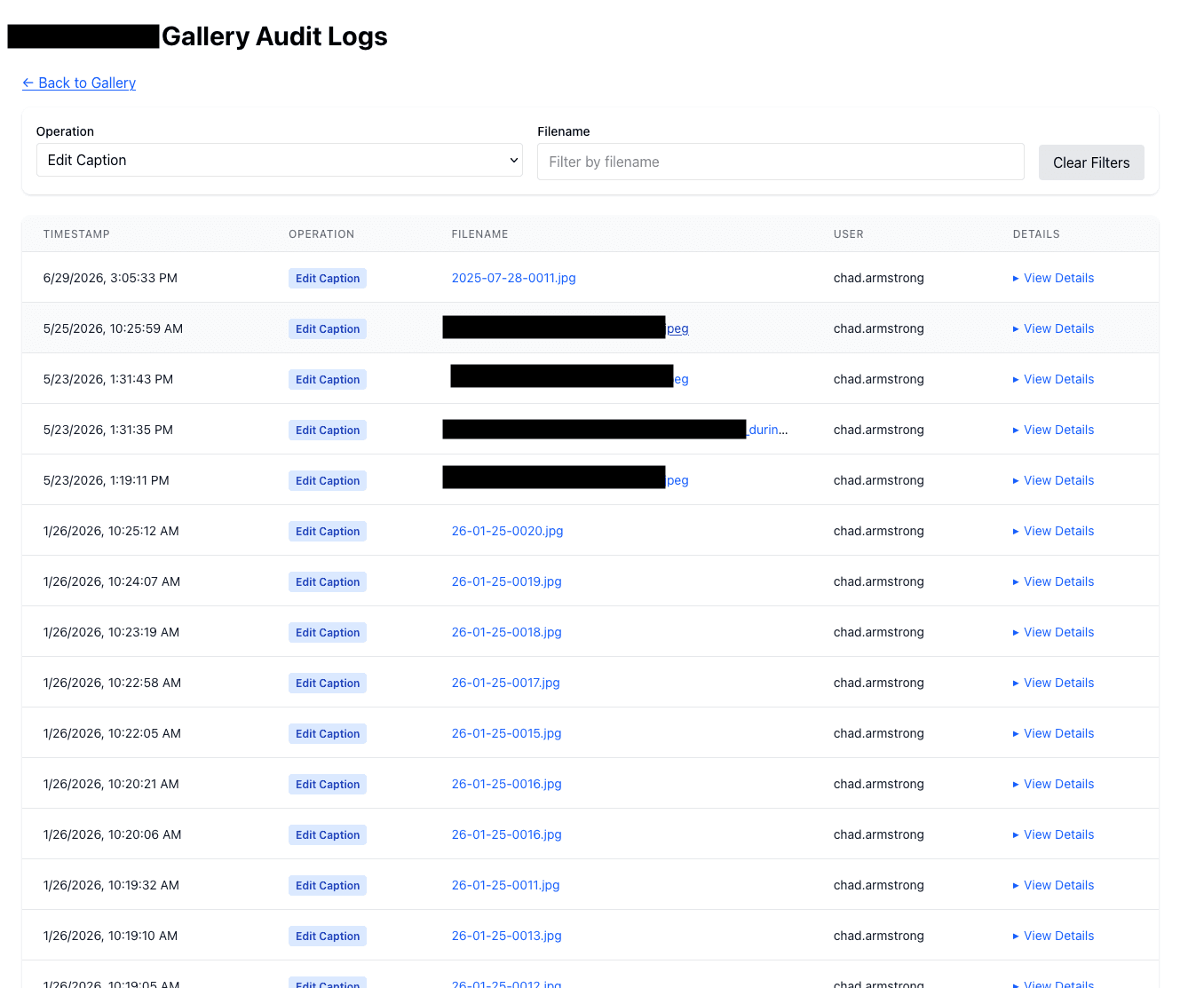
Built in Next.js with TypeScript. Editors can search full text across filenames, captions, and extracted PDF content simultaneously. Filtering stacks across media type, year, folder, and tags, with an interactive word cloud and year-distribution bar chart providing visual entry points into the collection. A three-tier RBAC system (admin, editor, public) ensures confidential materials are never exposed to the wrong audience, and every metadata change is recorded in a full audit log.

Infrastructure

Microservices run on Google Cloud Run (auto-scaling, containerized), the database lives on Supabase PostgreSQL with a dedicated schema and soft-delete architecture, and Terraform provisions AWS Lambda + S3 for automated daily backups with 30-day retention and Slack alerting.

Outcome

An unstructured archive became a fully searchable, AI-tagged, access-controlled research tool - with zero ongoing manual metadata work required for new ingestion.
Next.jsTypeScriptReact QuerySupabaseOpenAI APIGoogle Cloud VisionGoogle Drive APIPython / FlaskDockerGoogle Cloud RunTerraformAWS Lambda + S3Vercel
02

Legal Intake Platform

Case Management for an Immigration Law Firm

Legal Intake Platform
7 photos
+4

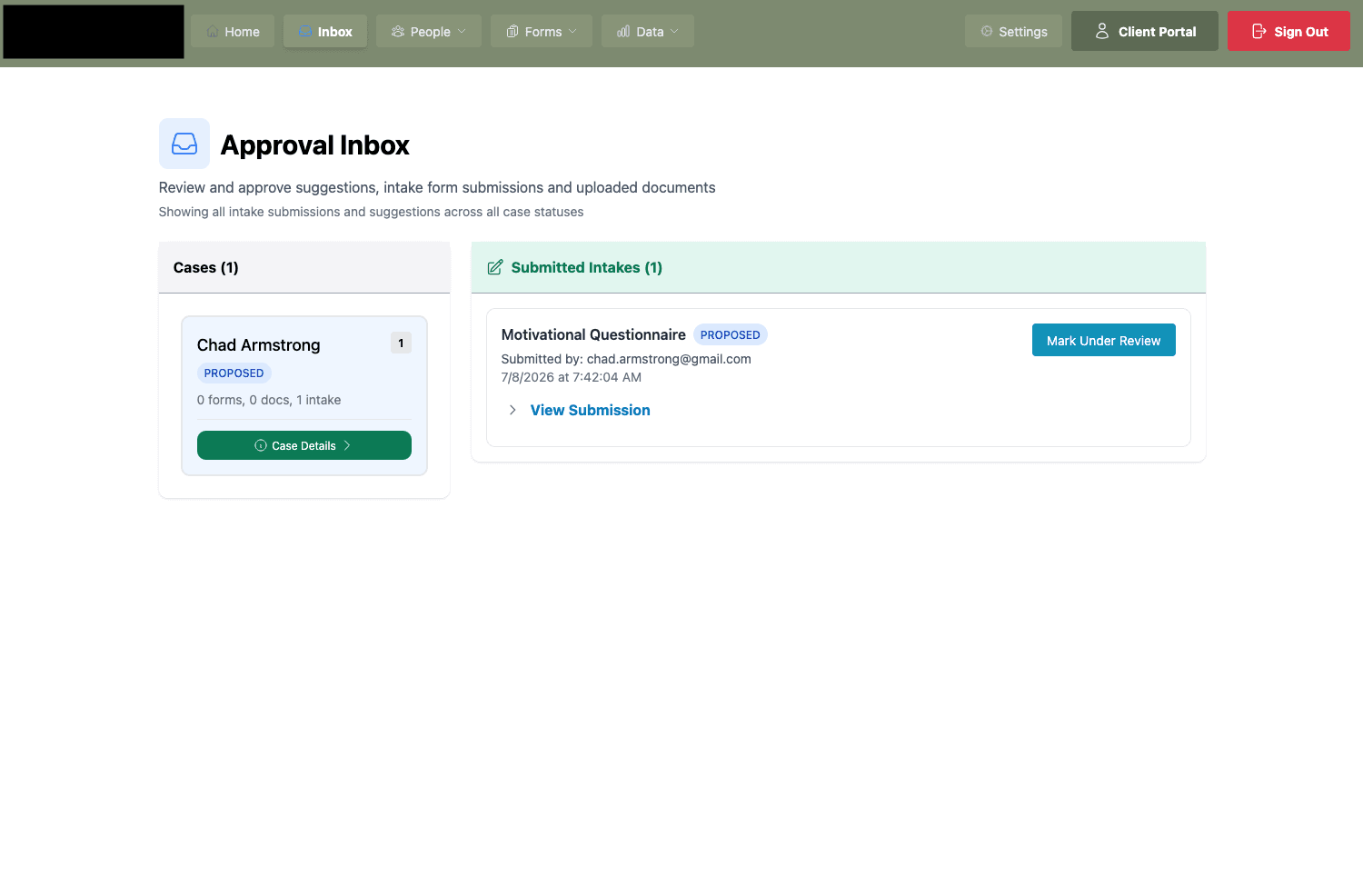
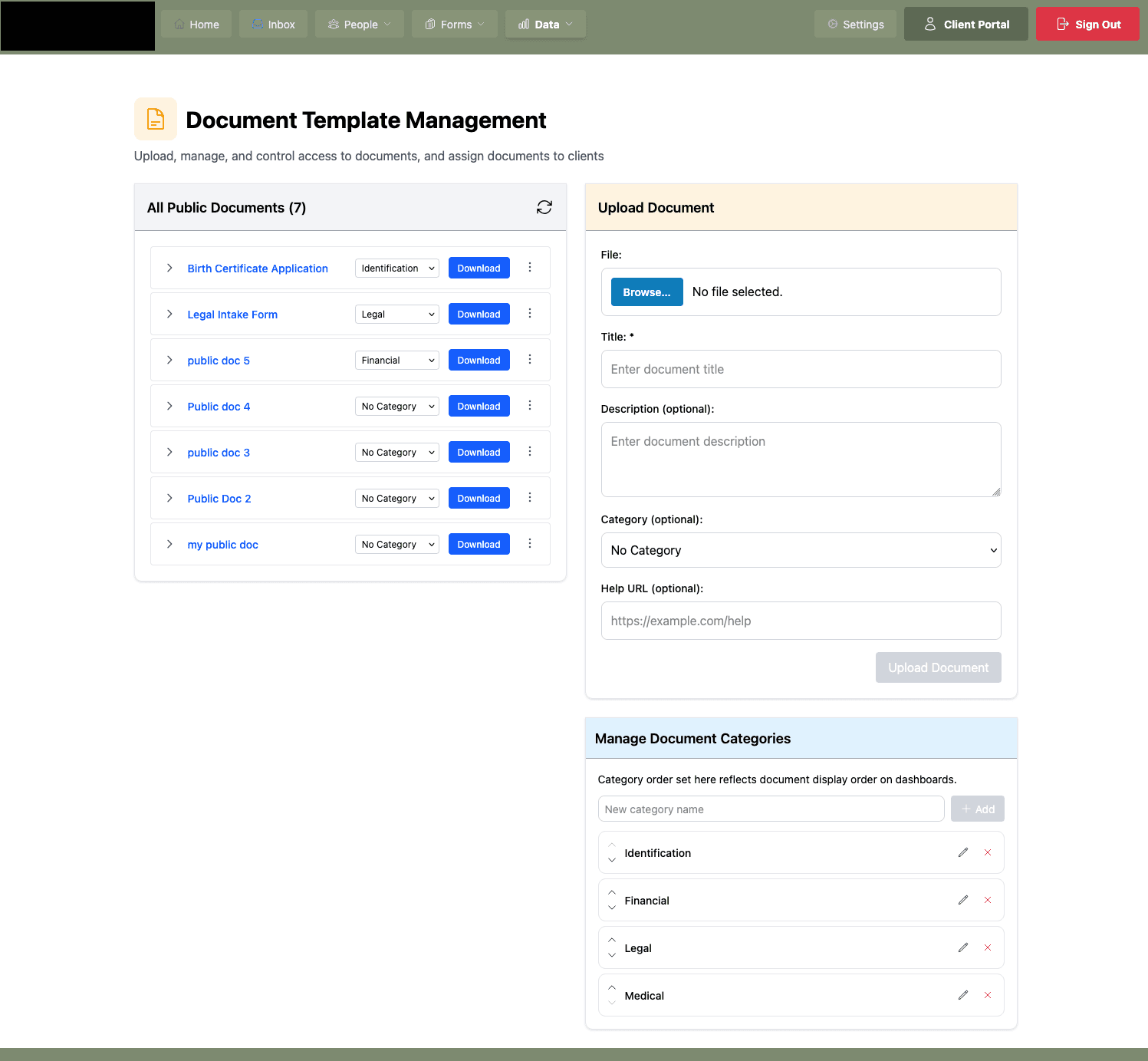
Built a full-stack SaaS application to digitize and automate the entire client intake pipeline for an immigration law firm. The platform replaced a manual, email-driven process with a structured system that captures client data, evaluates eligibility, and routes cases to the right attorneys - all without staff intervention at the initial triage stage.

What Was Built

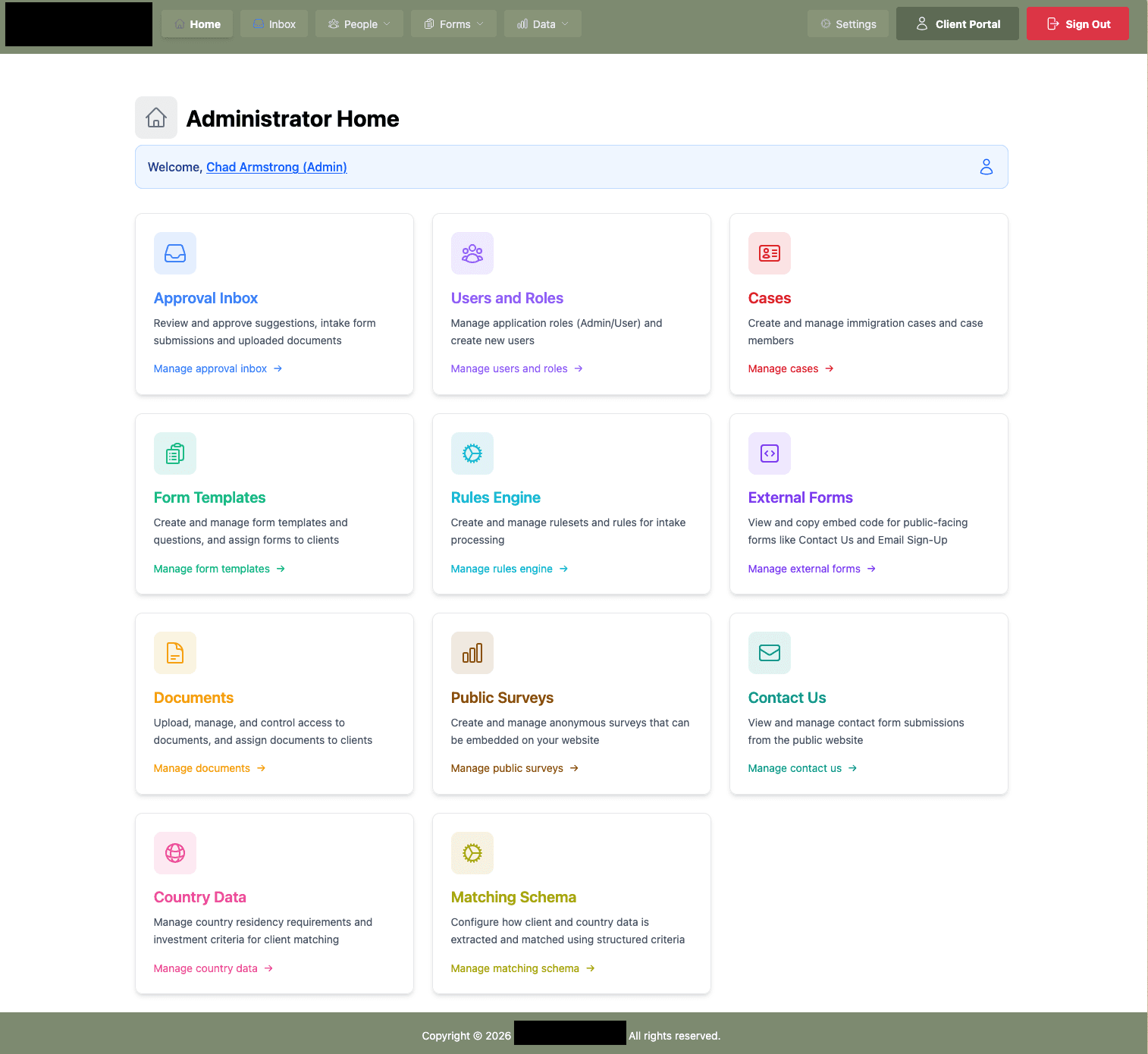
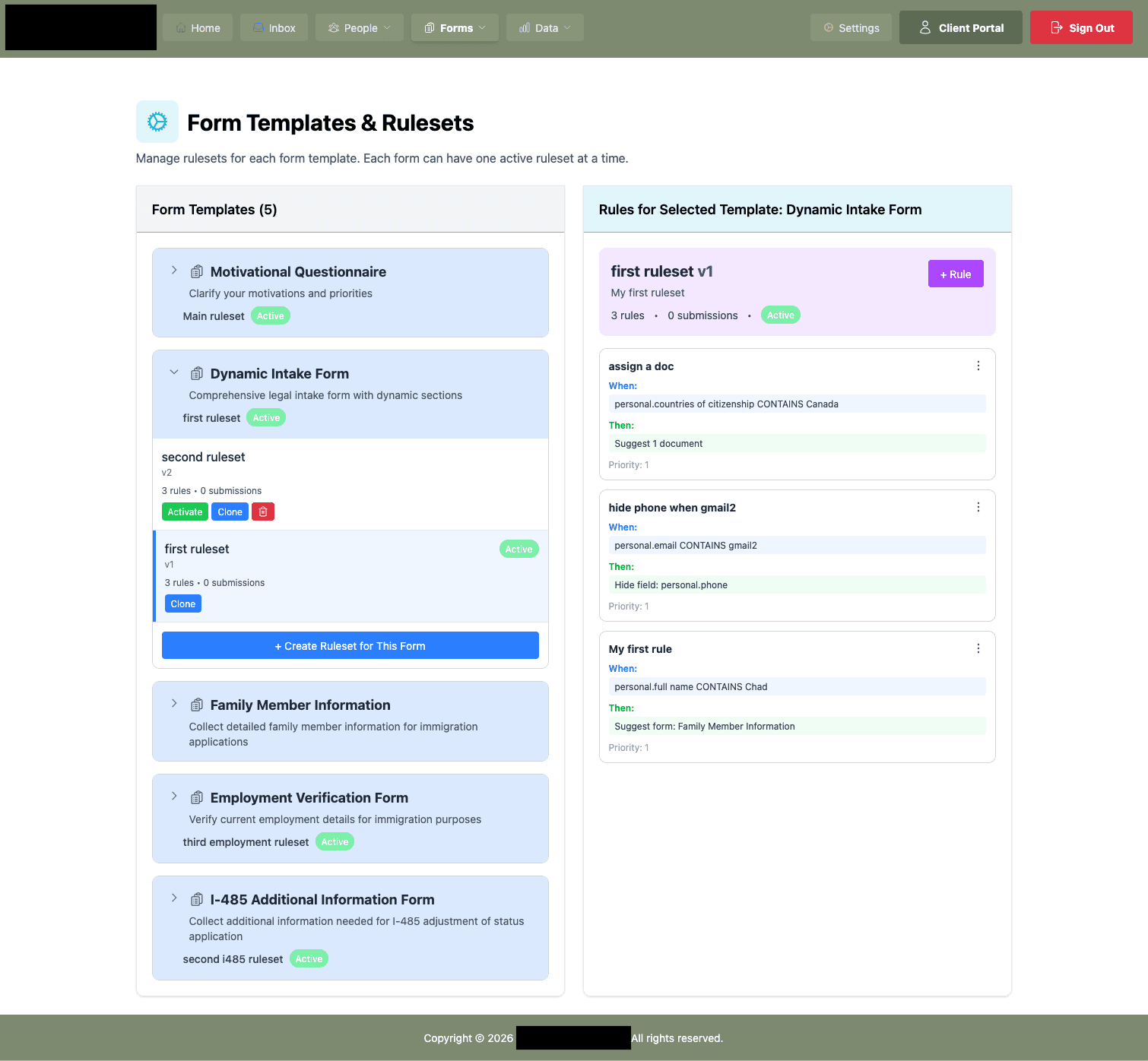
A multi-tenant web application with a client-facing intake portal and a separate admin portal for staff and attorneys. Clients complete dynamic, multi-step intake forms; the system evaluates their responses in real-time against a configurable rules engine and automatically matches them to applicable immigration pathways across multiple countries. Attorneys log in to a case inbox where submissions arrive pre-scored, pre-categorized, and ready for review.

Technical Architecture

A monorepo comprising a Next.js frontend, an Express.js API layer, 92 Supabase Edge Functions (Deno/TypeScript), and a PostgreSQL database with 37 tables. All business logic lives in the Edge Function layer - the Express routes are intentionally thin wrappers responsible only for authentication and request validation, which keeps the data access layer consistent and independently testable. Infrastructure is deployed on AWS (us-west-1) via Terraform, with Lambda functions handling document presigned-URL generation, a ClamAV antivirus scanning pipeline, automated database backups to S3, and Cloudflare at the edge for CDN, CAPTCHA, and routing.

AI Integration

OpenAI structured outputs extract structured client profiles from free-form intake responses, which are then matched against a criteria schema for each immigration pathway. The matching logic is criteria-based rather than embedding-based, which means every match result is fully explainable - a hard requirement for a legal context where attorneys need to understand and defend a recommendation. AWS Textract provides OCR for uploaded documents, feeding into the same extraction pipeline.

Security

The application handles sensitive legal and personal documents, so security was treated as a first-class requirement throughout. Authentication uses Supabase Auth with TOTP-based two-factor authentication enforced at five independent layers (frontend, auth callback, middleware, Express routes, and Edge Functions) so no single point of failure can bypass 2FA. All document uploads pass through asynchronous ClamAV scanning in Lambda before being made available. Every user action is written to an immutable audit log with IP, user agent, and timestamp. Rate limiting and Cloudflare Turnstile protect login endpoints from brute-force attacks. EC2 access uses AWS Systems Manager Session Manager - no SSH keys in circulation.

Outcomes

Intake submissions that previously required back-and-forth emails now arrive structured, validated, and pre-evaluated. The rules engine allows non-technical staff to manage eligibility logic without developer involvement. The admin portal gives attorneys a single interface for case assignment, document review, country criteria management, and analytics. The AI extraction layer surfaces the most relevant client profile data immediately, cutting the time attorneys spend on initial case review.

Next.jsExpress.jsSupabase (PostgreSQL + Edge Functions)AWS LambdaAWS S3AWS TextractAWS Secrets ManagerEventBridgeCloudWatchTerraformOpenAIClamAVCloudflareZodTailwind CSSpnpm monorepo
03

Garden Governance Portal

Community Garden Management Platform

Garden Governance Portal
2 photos

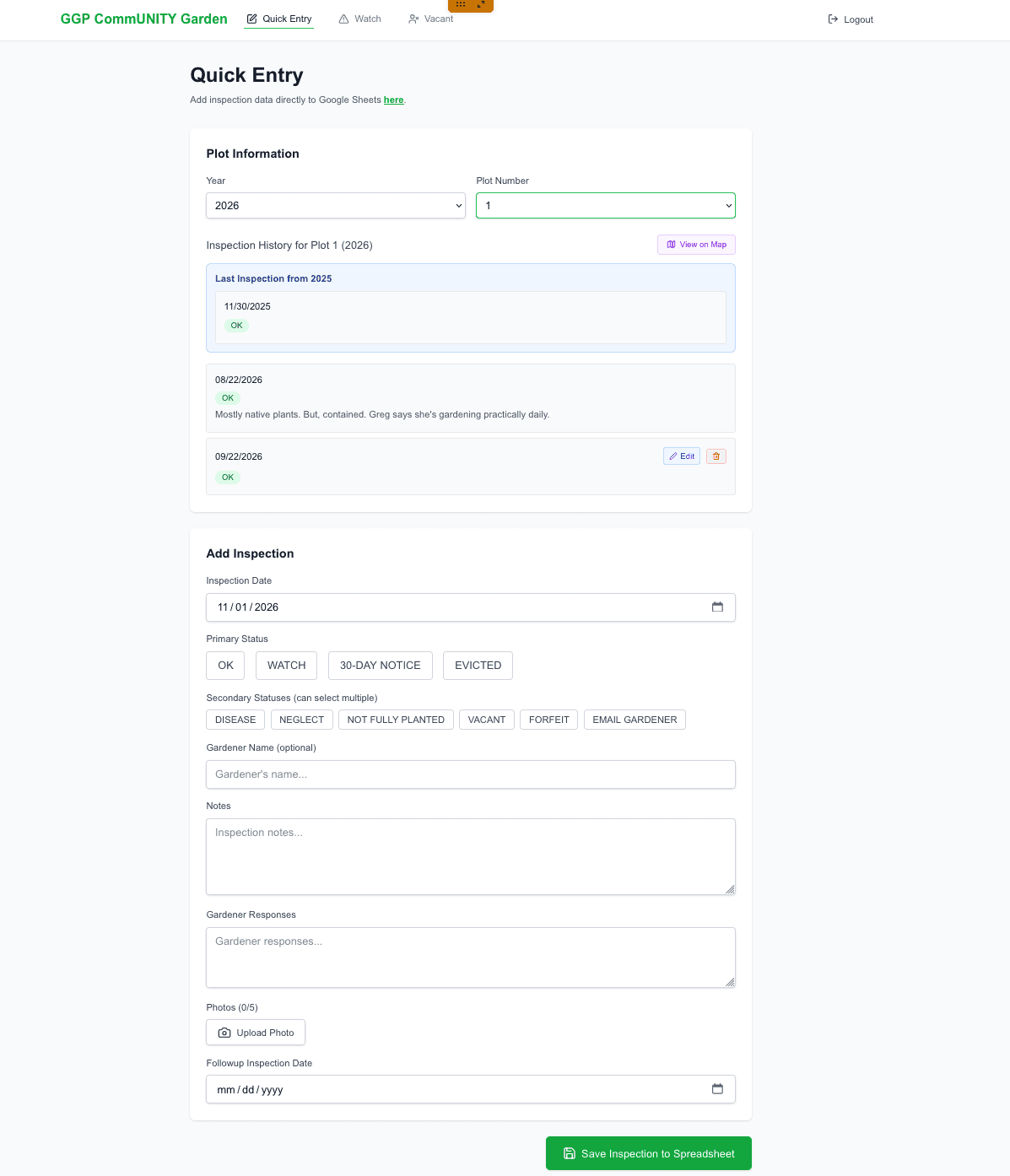
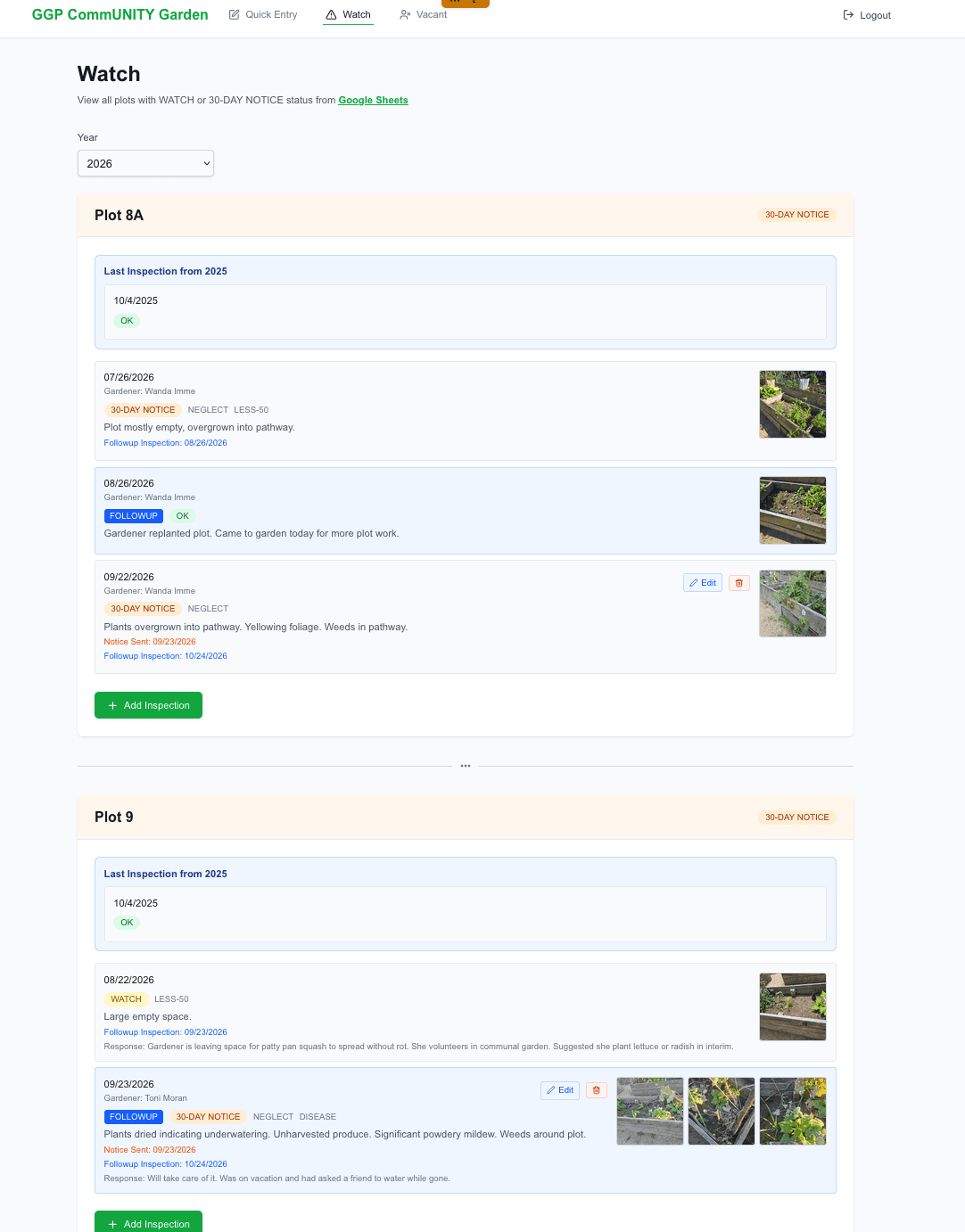
A full-stack web application built to modernize community garden management, replacing fragmented spreadsheets, email, and Google Drive folders with a centralized platform for plot assignment, seasonal inspections, and governance compliance.

Built with Next.js (App Router) and TypeScript on the frontend, backed by Supabase (PostgreSQL) with a custom schema, Row-Level Security, and a complete audit logging system that captures every create, update, and delete operation with before/after values and timestamps. Authentication runs through Supabase Auth with Google OAuth 2.0 for Drive access.

Key Integrations

The Google Drive API handles photo storage - inspectors can capture and upload site photos directly from a mobile device and have them linked to the relevant plot record. The Google Sheets API enables bulk data import/export workflows. Transactional email notifications are handled via AWS SES.

Infrastructure

Fully defined with Terraform on AWS: an automated backup pipeline uses a Lambda function to export the database every three days, compress it, and store it in S3 with 30-day retention. Credentials are managed entirely through AWS Secrets Manager, with no secrets hardcoded anywhere.

UX Highlights

A quick-entry mode optimized for on-site tablet use, a watch list with priority sorting for plots requiring action, multi-year inspection season management, and a full audit log viewer for governance transparency. Feature flags allow controlled rollouts of new capabilities like dues tracking without a redeployment.

Outcome

A governance committee that was previously coordinating inspections through email threads and shared spreadsheets now has a single source of truth for plot status, gardener history, and compliance records - with a full audit trail for accountability.

Next.jsTypeScriptSupabase (PostgreSQL)Supabase AuthGoogle Drive APIGoogle Sheets APIAWS SESTerraformAWS Lambda + S3AWS Secrets Manager
04

Apothetracker

Herbal Remedy QR Label Platform

Apothetracker
6 photos
+3

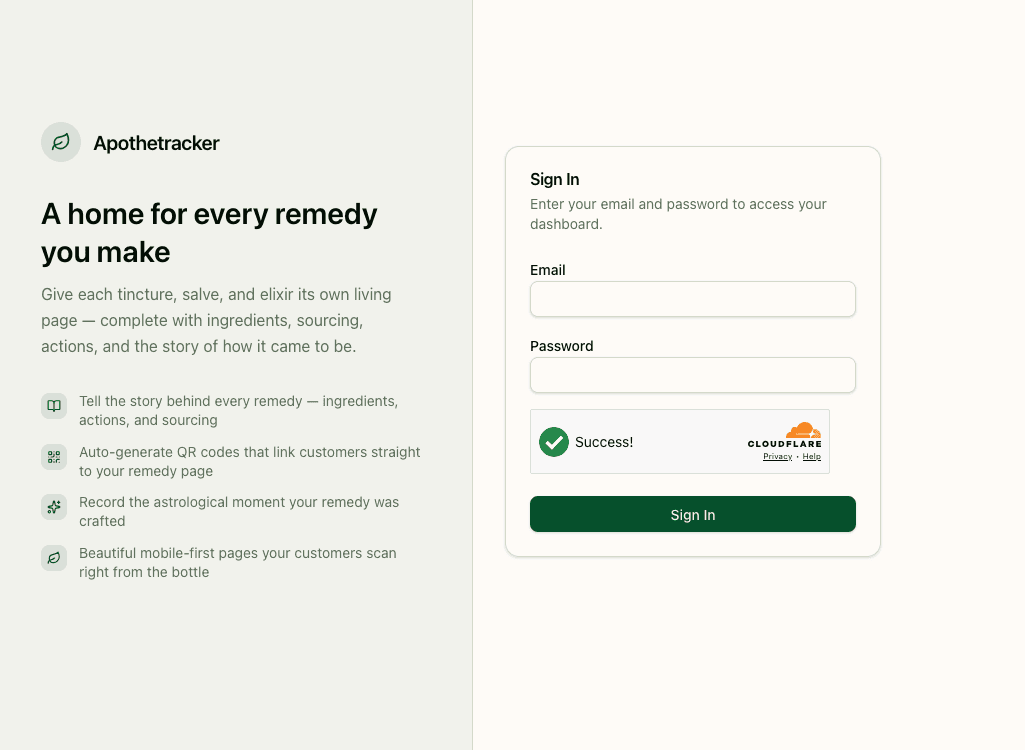
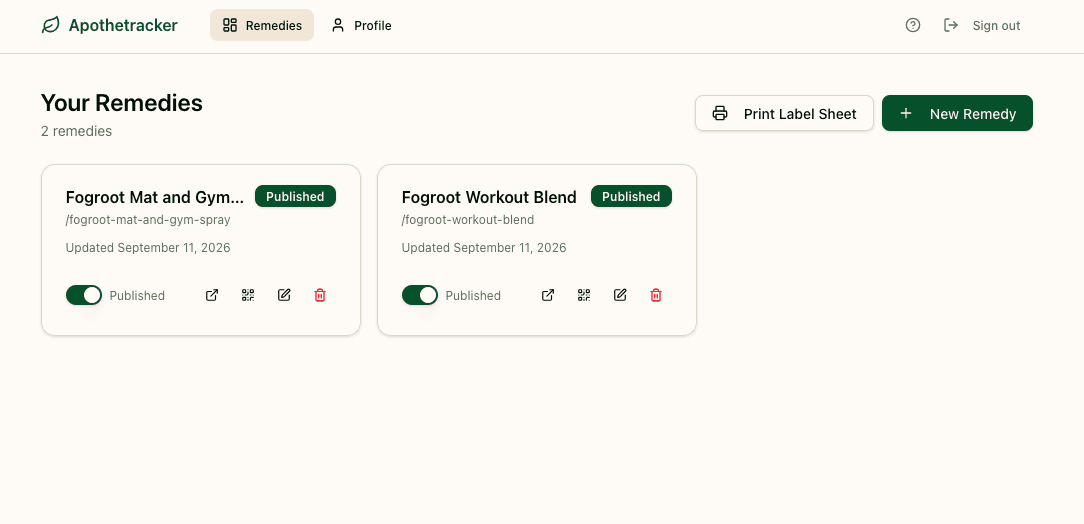
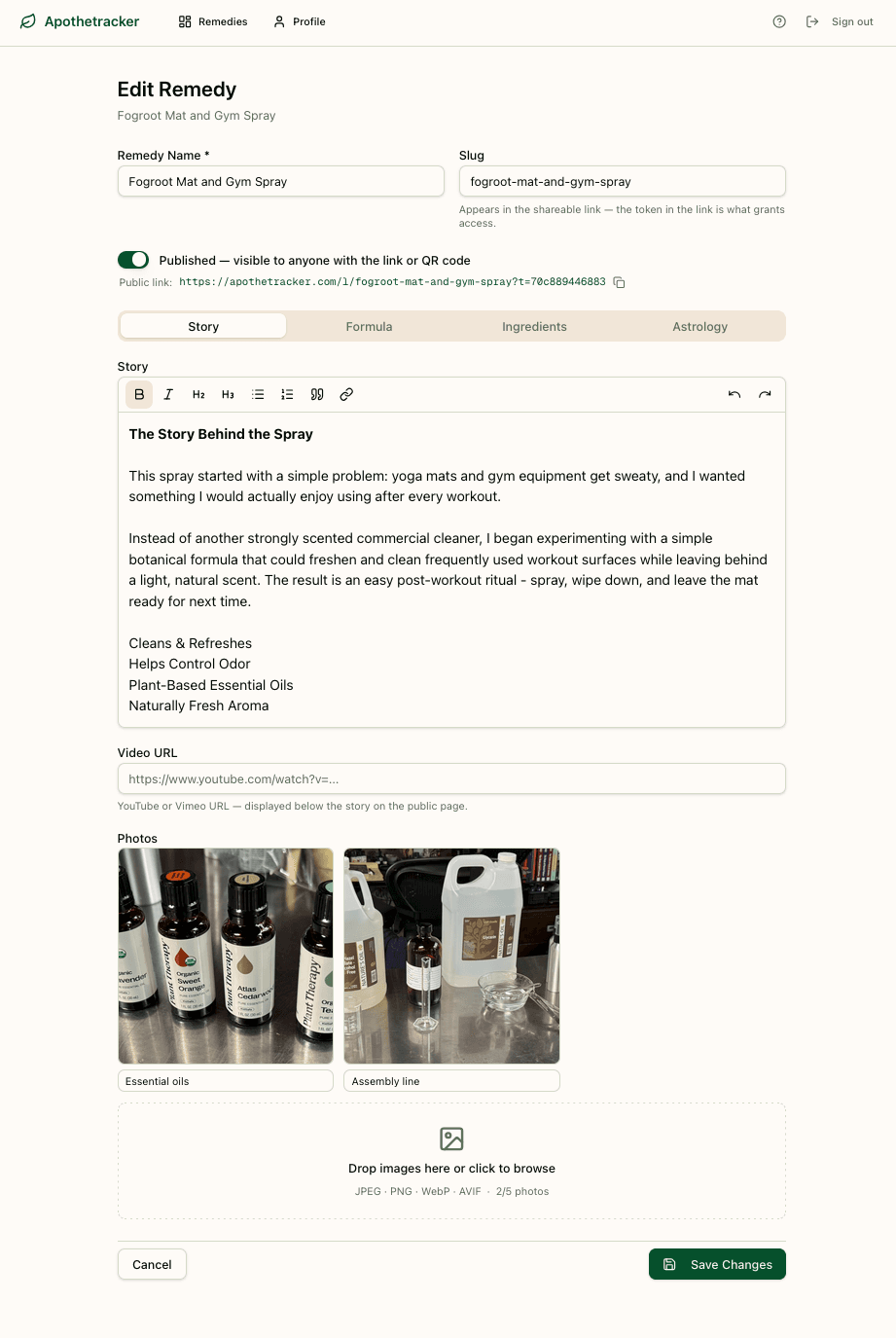
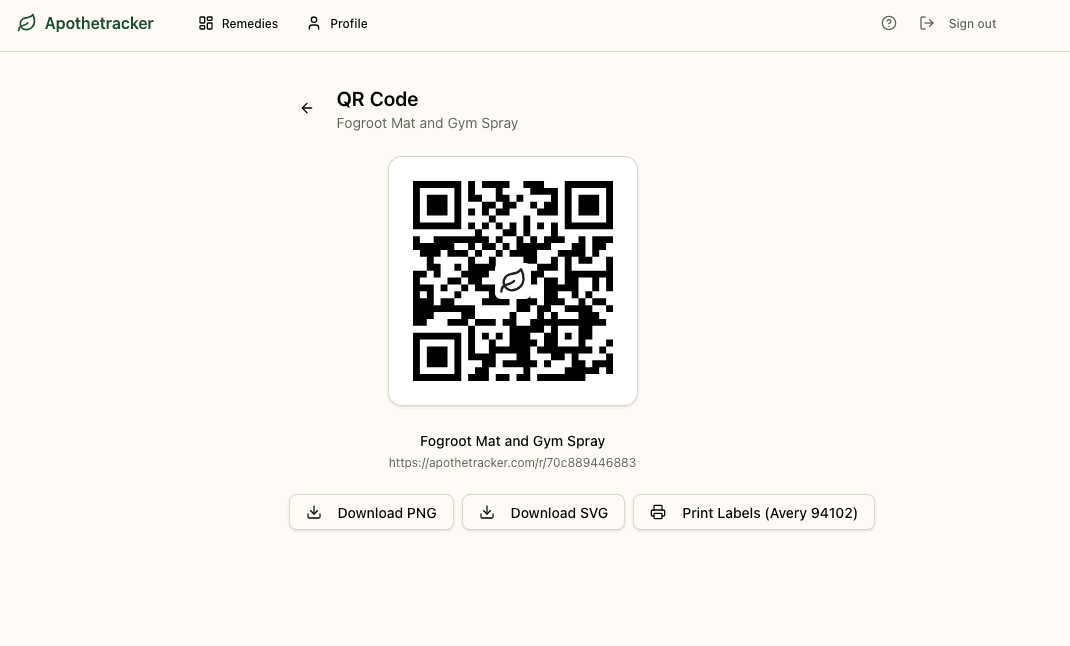
Apothetracker started as a tool I built for my own herbalism community and grew into a full multi-tenant SaaS platform for independent herbal remedy makers. The core product bridges physical and digital: makers build detailed remedy profiles on a desktop dashboard, then print QR code labels that attach to their tincture bottles. Customers scan the label and land on a mobile-first product page showing the remedy's story, ingredients, actions, and astrological chart.

Architecture

The app runs two distinct surfaces inside a single Next.js 15 / React 19 / TypeScript application deployed on Vercel. The public-facing remedy view is fully server-rendered with no authentication layer, optimized for speed on mobile devices. The maker dashboard is a client-rendered SPA backed by TanStack Query v5 and a typed REST API layer, keeping data-fetching logic cleanly separated from UI components. Row-level security in PostgreSQL (via Supabase) enforces data isolation at the database level, so each maker's remedies are inaccessible to other users even without application-layer guards.

QR Codes and Label Printing

Server-side PDF generation produces print-ready Avery 94102 label sheets (80 labels per sheet, 3/4" square) from any combination of remedies in a single pass. The batch PDF engine tiles up to 80 QR codes with remedy names printed in the inter-label gap, ready to hand off to a home printer or commercial print service. Labels embed a branded SVG logo centered over each QR code.

Infrastructure

AWS resources (S3 image storage, SES email identity, IAM user) are fully provisioned via Terraform, so infrastructure is version-controlled, reproducible, and consistent across dev and prod. Image uploads use server-generated presigned S3 URLs so credentials never touch the browser. Cloudflare Turnstile protects the auth form against bot signups with server-side token verification. CI/CD runs on GitHub Actions with Vercel deployment on every push to main.

Notable Technical Details

Dual Supabase client architecture (browser vs. server) prevents credential leakage in Server Components and API routes. Planetary chart calculations run entirely client-side using astronomy-engine with OSM Nominatim geocoding, so no paid mapping API is required. The botanical color palette is built on oklch for perceptually uniform color across the full lightness range. Rich text is stored as HTML via a Tiptap editor and rendered with a custom prose typography class.

Next.js 15React 19TypeScriptSupabase (PostgreSQL)TanStack Query v5Tailwind CSS 4TiptapAWS S3AWS SESTerraformCloudflare TurnstileGitHub ActionsVercel
05

Study Tools

Herbal Medicine Reference Suite

Study Tools
13 photos
+10

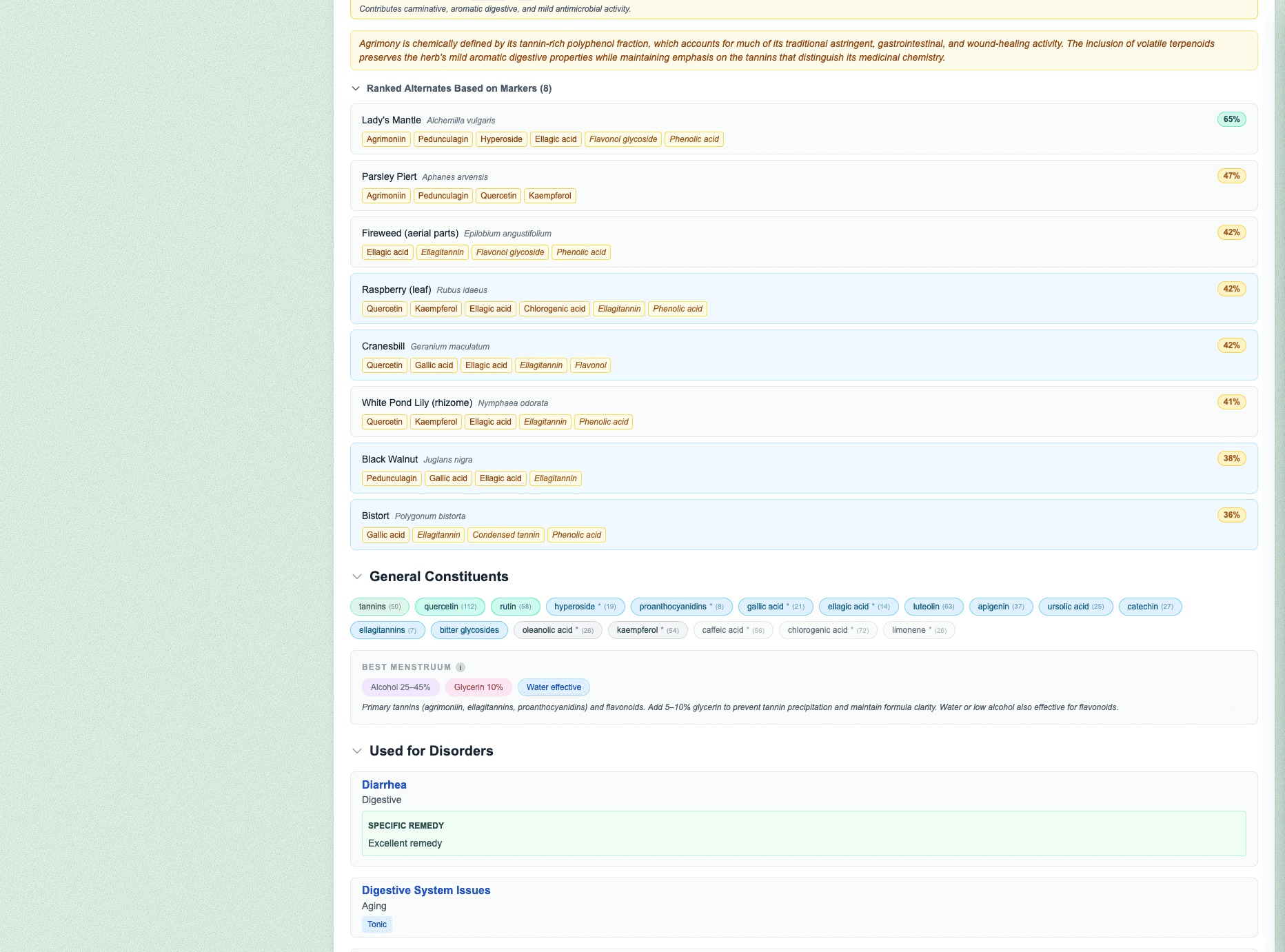
A pair of complementary web applications built for students and practitioners of Western herbalism and Ayurvedic medicine, deployed in production and actively used through coursework at the Berkeley Herbal Center and Kerala Ayurveda Academy.

Herbal Visualizer

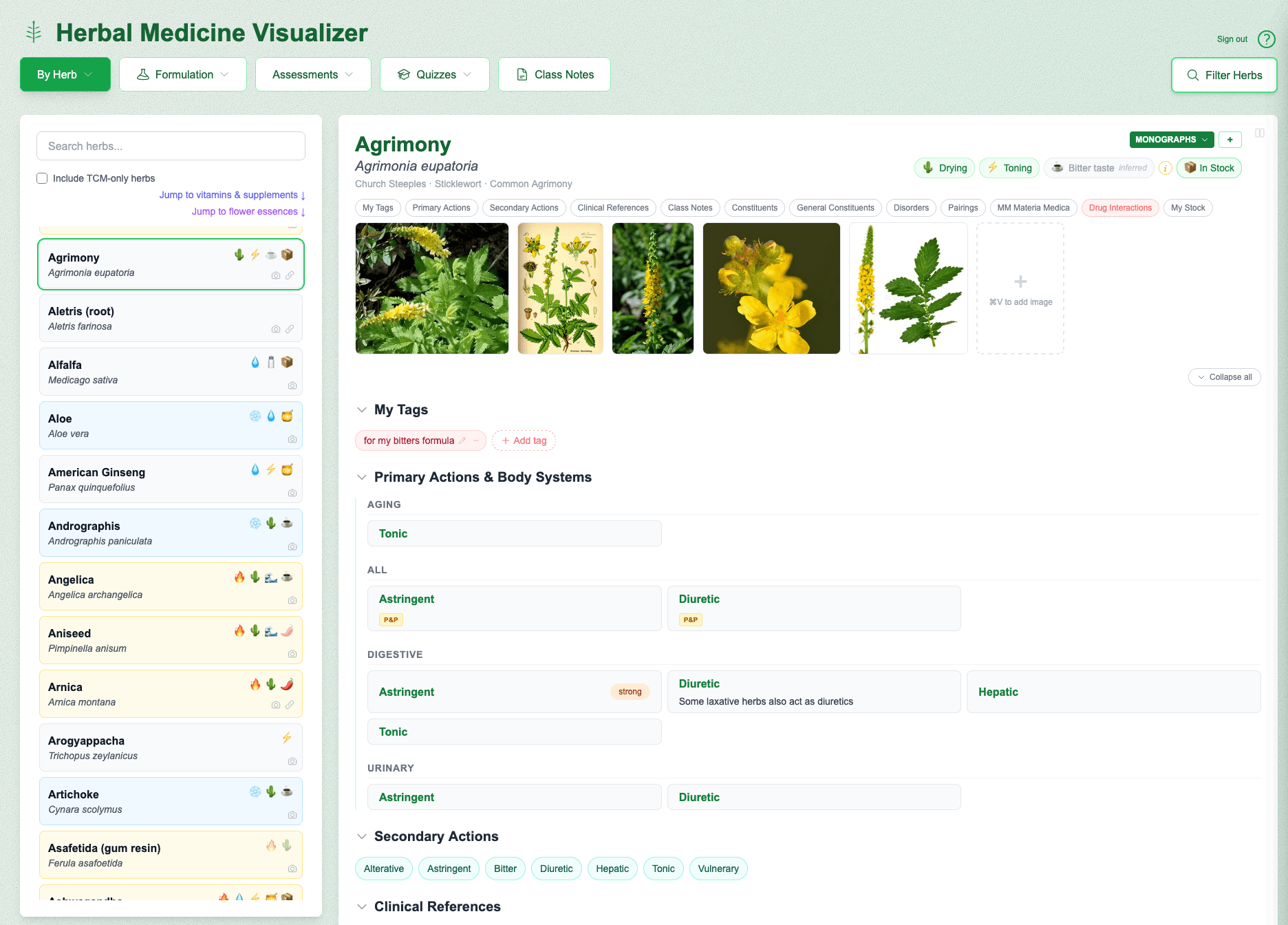
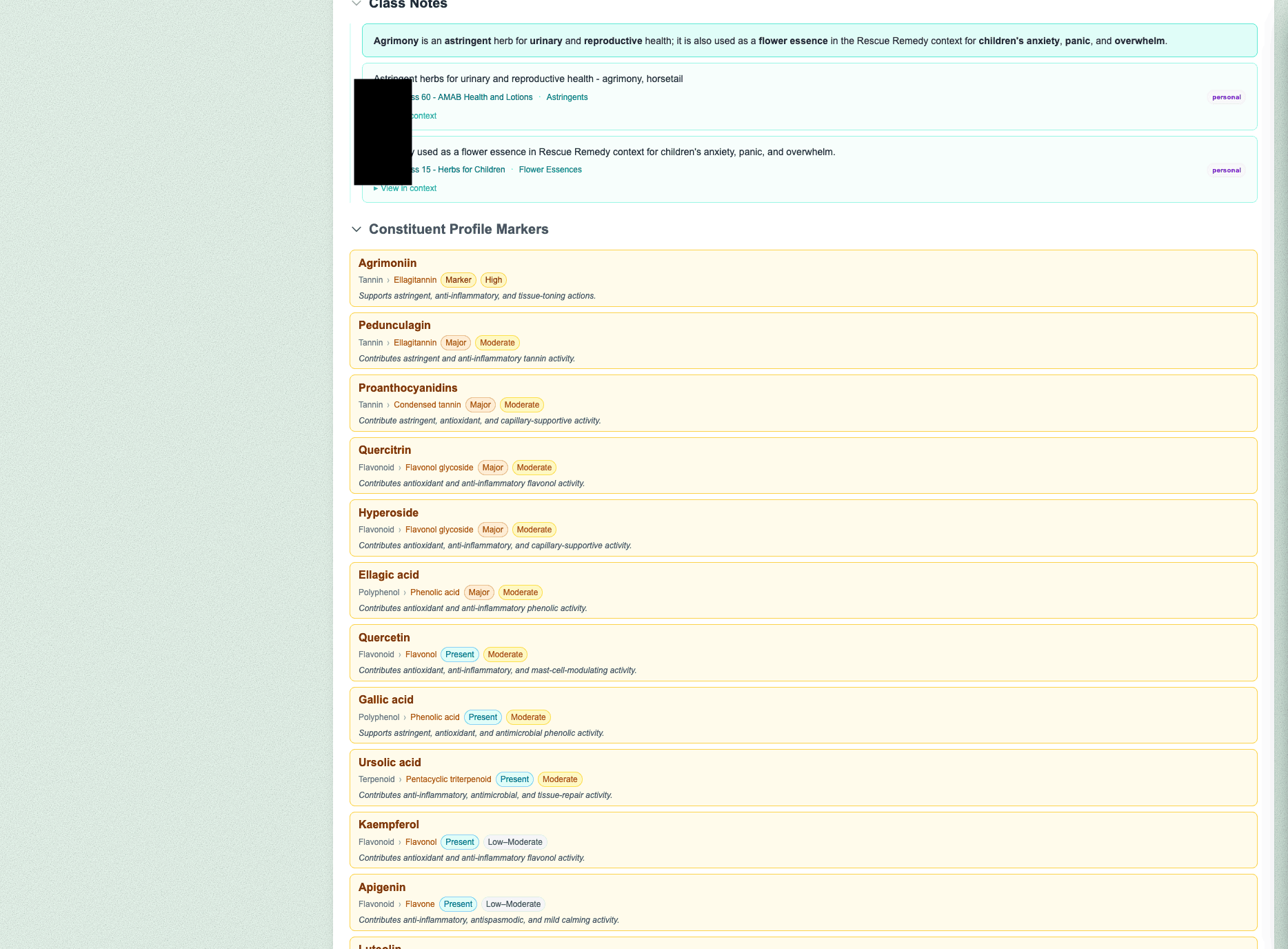
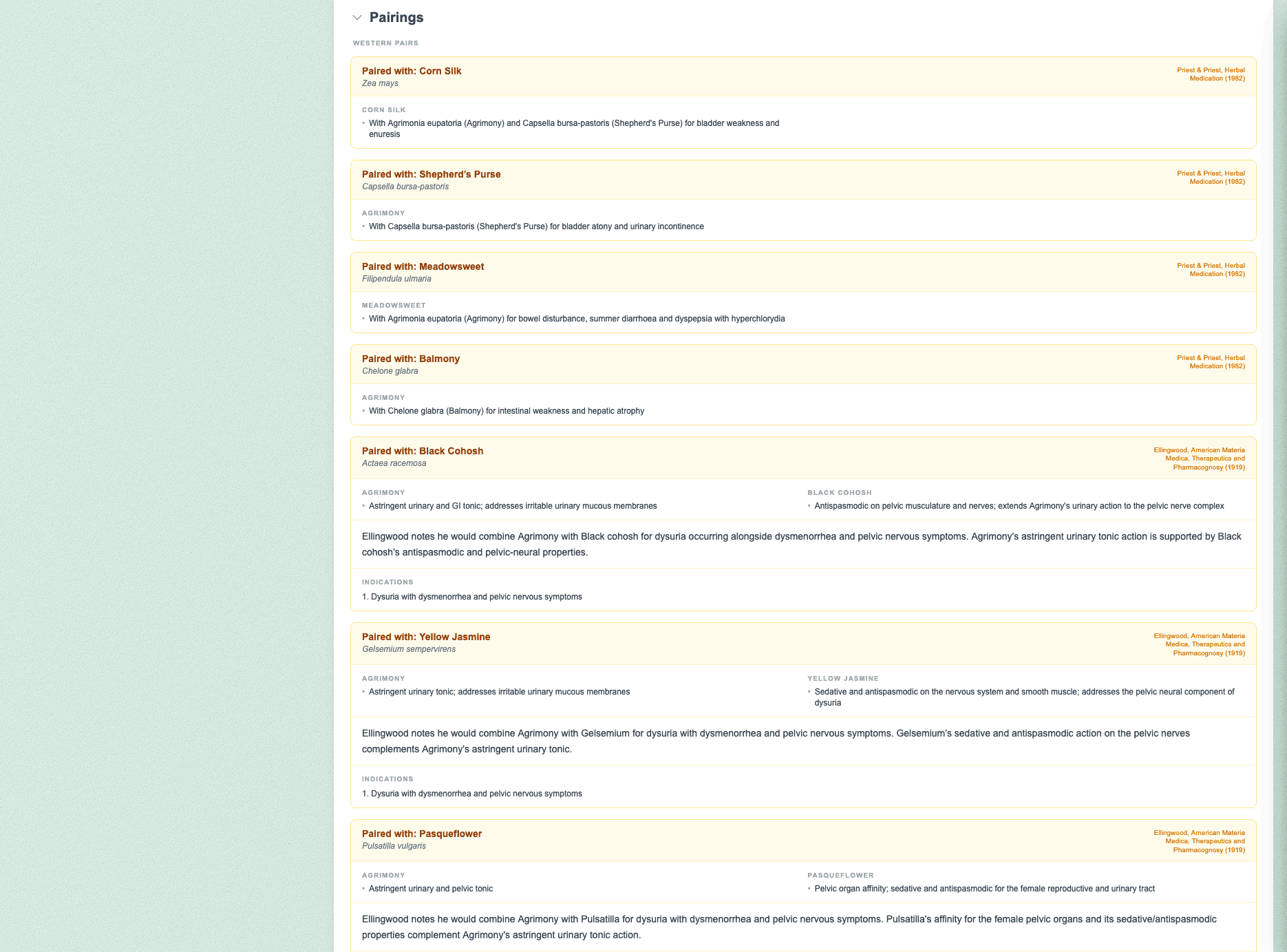
A clinical reference platform indexing 500+ medicinal herbs across 12 body systems, 100+ disorders, and 21 primary therapeutic actions. Practitioners can navigate from a disorder (e.g., bronchitis) to the indicated actions, specific remedy herbs, and complete prescriptions with parts ratios - or approach it from the opposite direction, filtering all herbs by action and energetics. The platform includes a formula builder, dosing and extraction calculators, constituent network graph, flashcard and quiz system, flower essence inventory, and a physiomedicalist intake form that suggests herbs based on deficiency and excess patterns. A per-user herb inventory with stock tracking is available to logged-in accounts.

Ayurveda Visualizer

A Sanskrit glossary and dravya (substance) browser tied to the KAA 101-106 curriculum. It provides fuzzy, diacritic-insensitive search across 320+ terms and definitions, a multi-dimensional ingredient filter (dosha effects x guna qualities), and a Tattvas philosophy reference - all gated behind Cloudflare Turnstile to serve students without requiring user accounts.

Technical Details

Both apps run on Next.js 15 (App Router), React 19, TypeScript, and Tailwind CSS, backed by a shared Supabase PostgreSQL instance with isolated schemas. Contraindication data was extracted from a 64 MB Stockley's Drug Interactions PDF using a custom offline pipeline (PDFtoppm + ImageMagick). Herb images are served from AWS S3 via presigned URLs with Sharp-generated thumbnails. Database state is managed through 475+ incremental migrations. Caching is layered: Vercel CDN edge caching for API responses, localStorage hydration on the client, and daily quota management for third-party APIs. Both apps share a Cloudflare Turnstile bot-verification gate implemented in Next.js middleware.

Outcome

A fully searchable clinical reference that replaces static PDFs and disconnected class notes with a unified, filterable interface - with all data query complexity hidden behind a fast, mobile-friendly UI that works in the field.

Next.js 15React 19TypeScriptTailwind CSSSupabase (PostgreSQL)AWS S3SharpCloudflare TurnstileVercelSpoonacular API

Have a project in mind?

Book a free 30-minute intro call.

Book Chad